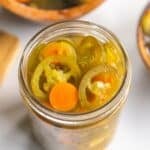
Taqueria Style Pickled Jalapenos and Carrots
This recipe for quick pickled jalapenos carrots and onions is bold, tangy, and sautéed for authentic escabeche-style flavor. No canning required, and it’s the perfect side dish or snack.
Ingredients
- 1 tablespoon avocado oil optional, for light sautéing, any neutral oil works
- 1 carrot medium size, peeled or unpeeled and thinly sliced (optional)
- ½ onion medium size, sliced into thick strips
- 6-8 jalapenos large size, sliced into ¼-inch rings, use more or less depending on size and how tightly you pack the jar
- 5 cloves garlic smashed
- 1 cup white vinegar
- 1 cup water
- 1 bay leaf large size, use 2 bay leaves if they're small
- ½ teaspoon whole black peppercorns
- ½ teaspoon Mexican oregano dried
- 1 teaspoon sugar optional, OR maple syrup // softens the sharpness of the vinegar without making it sweet
- 1.5 teaspoons salt I use sea salt, but kosher also works (see Notes for best types of salt to use)
Instructions
- Sauté veggies for authentic escabeche flavor: (See Notes for oil-free option) Heat oil in a pan over medium heat, then add the carrots and cook for 1-2 minutes. Stir in the onions, jalapeños, and garlic and cook for an additional 2-3 minutes, just until everything is slightly softened. Don't overcook, you want everything tender-crisp, not mushy.
- Simmer in brine: Add remaining ingredients, bring to a gentle boil, then reduce to a simmer for 5 minutes. Jalapeños should dull slightly in color but still hold their shape.
- Transfer to jars: Pack into clean glass jars with a slotted spoon. Then, very carefully pour in hot brine. Make sure everything is fully submerged in the brine (see Notes for my trick to keeping them submerged).
- Cool & refrigerate: Cool to room temperature before sealing. They can be enjoyed right away, but the flavor develops if you let them sit sealed in the refrigerator for 24-48 hours.
Notes
- Handling jalapenos: Wash your hands after handling chilis. And if you have sensitive skin, make sure to wear gloves.
- Oil-free option: Omit oil and use 1 tablespoon of water to sauté the veggies. Add more as needed in 1 tablespoon increments to prevent sticking while still softening and building flavor.
- Best pans to use: Use a non-reactive saucepan (like stainless steel or enameled cast iron) when simmering your brine. Reactive materials like aluminum can affect the taste and cloud the brine.
- Best salt to use: I prefer sea salt, but Kosher and pickling salt also work. I do not recommend Iodized salt, as it can cloud the brine and affect the flavor.
- Keep veggies submerged: Pack the vegetables snugly and pour in enough brine to keep them covered.
- Save the brine: Don’t toss leftover pickling liquid! Use in soups, marinades, or to add flavor to refried black beans or this vegan Mexican rice.
- Flavor improves with time: They’re good right away, but peak flavor comes after 24–48 hours in the fridge.
Nutrition
Calories: 144kcal | Carbohydrates: 14g | Protein: 2g | Fat: 7g | Saturated Fat: 1g | Polyunsaturated Fat: 1g | Monounsaturated Fat: 5g | Sodium: 1778mg | Potassium: 296mg | Fiber: 3g | Sugar: 6g | Vitamin A: 5567IU | Vitamin C: 56mg | Calcium: 61mg | Iron: 1mg
