

Make an easy Asian peanut sauce recipe with pantry staples. This creamy 5-minute spicy Thai peanut sauce is perfect for cold Asian noodle salads, spring rolls, and bowls. No coconut milk required, just a bold sauce for dipping, drizzling, and tossing.
Try this homemade peanut sauce with tofu summer rolls or tossed with my Asian cold noodle salad. It’s also really good with crispy baked tofu.
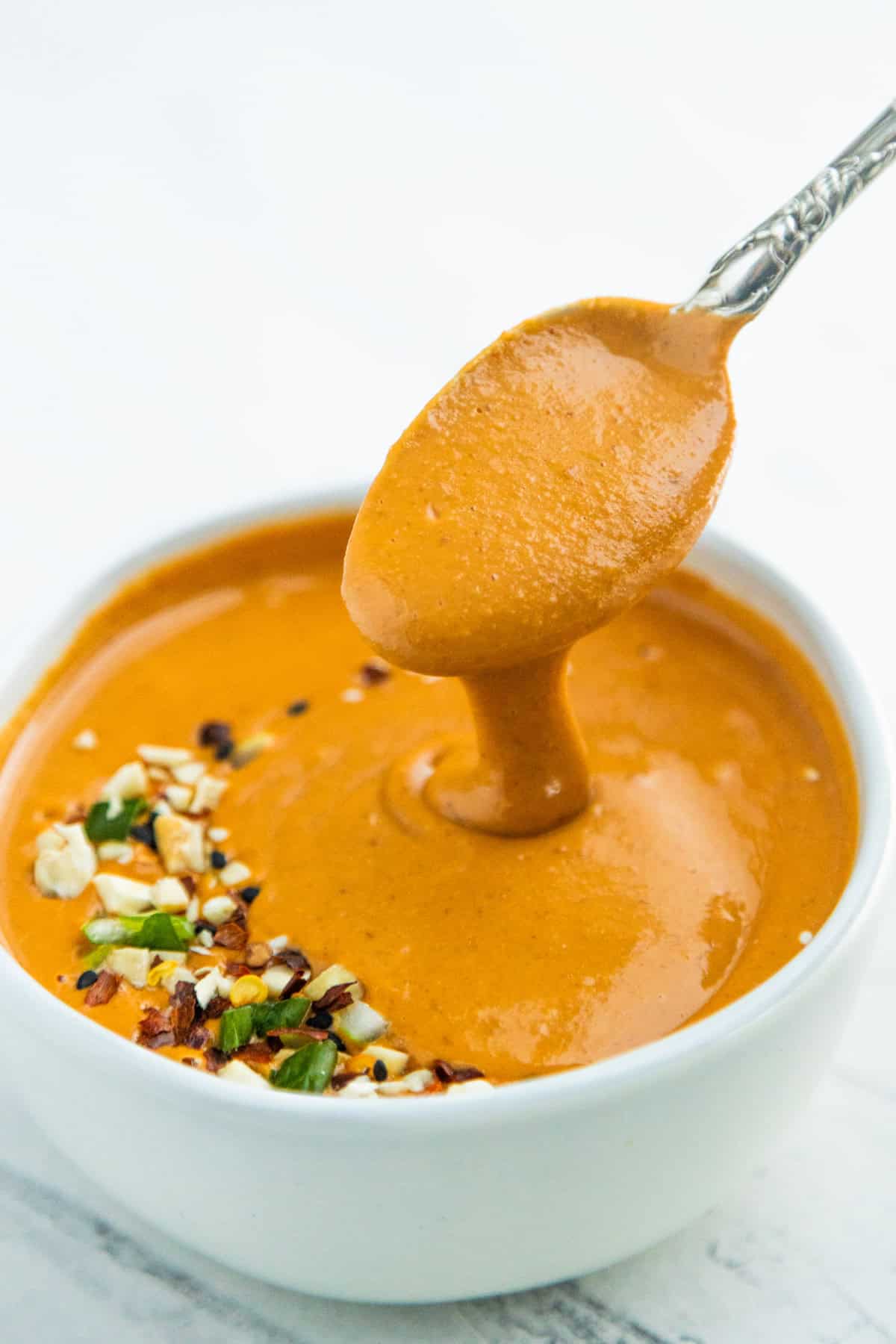
A Quick Look: Easy Asian Peanut Sauce
- 📝 Recipe Name: Easy Asian Peanut Sauce
- 🕒 Total Time: 5 minutes
- 👥 Servings: 4
- 🎯 Key Ingredients: Peanut butter, tamari, lime juice, garlic, ginger, chili garlic sauce
- 🌱 Dietary Info: Vegan, dairy-free, oil-free peanut sauce option
- ✨ Best For: Spring rolls, noodles, tofu bowls, stir fry, dipping
- 💕 Why You’ll Love It: Works with so many meals. Use it as a peanut dipping sauce, noodle sauce, stir fry sauce, or drizzle for bowls.
Jump to:
- A Quick Look: Easy Asian Peanut Sauce
- Why This Recipe Works
- What Is Asian Peanut Sauce?
- Is Thai Peanut Sauce Spicy?
- Ingredients & Substitutions
- Tested Tips
- How to Make Asian Peanut Sauce
- How to Use This Asian Peanut Sauce Recipe
- Storage and Meal Prep
- Easy Asian Peanut Sauce FAQs
- Perfect Pairings
- 📖 Recipe
- 💬 Comments
I love easy vegan sauces, especially when they have simple ingredients and taste incredible. It’s how I make dinner taste way more exciting. There's something about the drizzle and the dip that makes it all come together.
This spicy peanut sauce is one I use often. It’s creamy, rich, a little spicy, and works with just about anything. It’s one of my favorite ways to make a quick peanut sauce for noodles, tofu, summer rolls, or rice bowls, like my sticky tofu rice bowl, and crunchy veggies.
Why This Recipe Works
This Asian peanut dipping sauce is the kind of recipe that makes simple meals feel way more put-together.
- Creamy, bold flavor: Peanut butter, lime, tamari, and chili garlic sauce give this sauce that sweet-savory-spicy balance.
- Quick and easy: It comes together in just 5 minutes with simple pantry ingredients.
- Easy to adjust: Make it thinner for noodles, thicker for dipping, or milder if you want less heat.
- No coconut milk needed: It stays creamy and flavorful without it.
- Good on everything: Use it for spring rolls, tofu, bowls, stir fry, or noodles.
I also like dipping crispy glazed tofu and air-fried sriracha maple tofu into this simple peanut sauce.
What Is Asian Peanut Sauce?
Asian peanut sauce is a creamy, savory sauce made with peanut butter, tamari or soy sauce, garlic, ginger, lime, and a little sweetness.
While it's a staple in Thai restaurants, peanut sauce actually originated in Indonesia where it is called bumbu kacang.
It’s often used as a dip for spring rolls, a sauce for noodles, or a drizzle on tofu bowls and stir-fry. You’ll also see it called Thai peanut sauce, especially when served with noodles, satay, or salad rolls.
If you love having homemade dipping sauces like this ready to go, you might also like my maple soy glaze, easy egg roll dipping sauce, and veggie stir fry sauce.
Is Thai Peanut Sauce Spicy?
It has a kick, but you can control the heat. Reduce the chili sauce for a milder version or add more if you like it hot.
Ingredients & Substitutions
Here’s what you’ll need to make this spicy Thai peanut sauce:
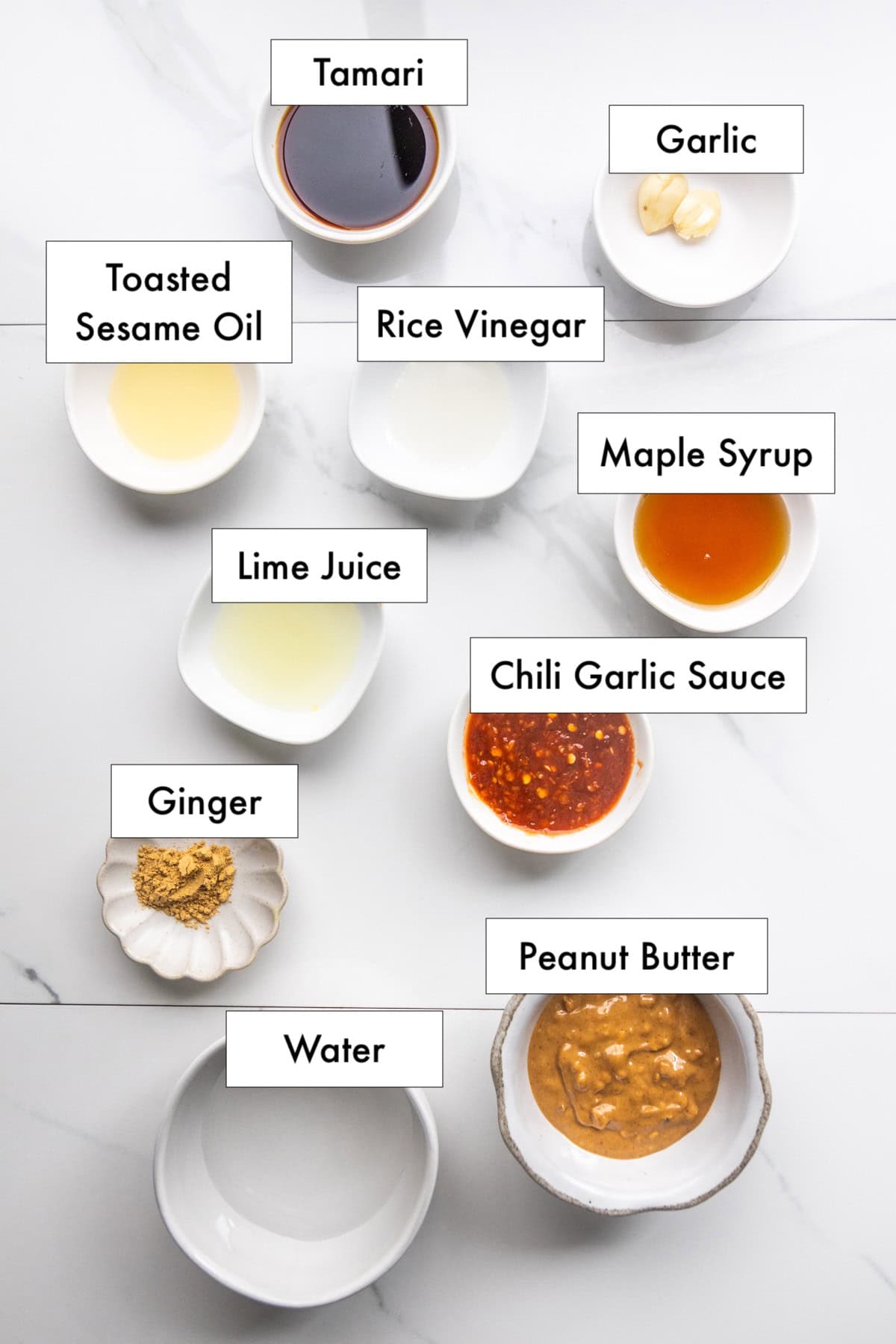
- Peanut butter: I like natural peanut butter, but any kind (crunchy or creamy) will work. You can also use almond butter.
- Tamari (or soy sauce): Use coconut aminos for a soy-free option.
- Maple syrup: You can swap agave or honey if not vegan.
- Lime juice + rice vinegar
- Chili garlic sauce + garlic + ginger: You can also use sriracha or crushed red pepper flakes. Adjust to your spice preference.
I also love this Thai food peanut sauce drizzled over this zucchini mushroom stir fry, and my vegetarian egg roll in a bowl.
Tested Tips
- Use natural peanut butter: Look for one with just peanuts and salt if possible.
- Warm water blends better: It helps everything smooth out faster and gives the sauce a silkier texture.
- You can adjust spice level . Start with one tablespoon chili sauce and increase if you like more heat.
- No blender? A bowl and whisk work too. Just warm the peanut butter slightly first.
- Peanut sauce naturally thickens after chilling. Just stir in a little warm water or lime juice until it loosens back up.
How to Make Asian Peanut Sauce
Find the full recipe with exact measurements in the recipe card below.
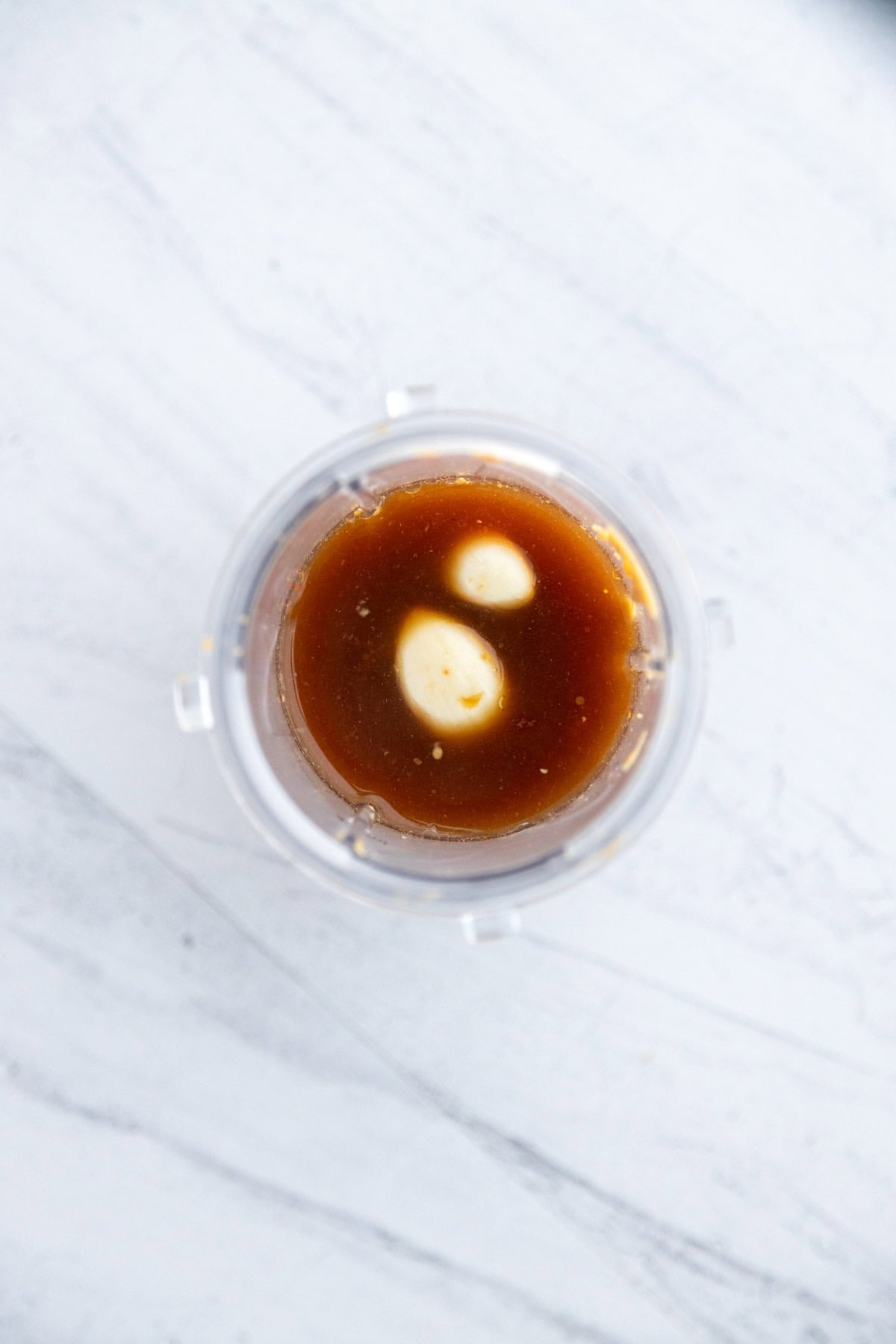
- Step 1: Add all ingredients to a blender or food processor.
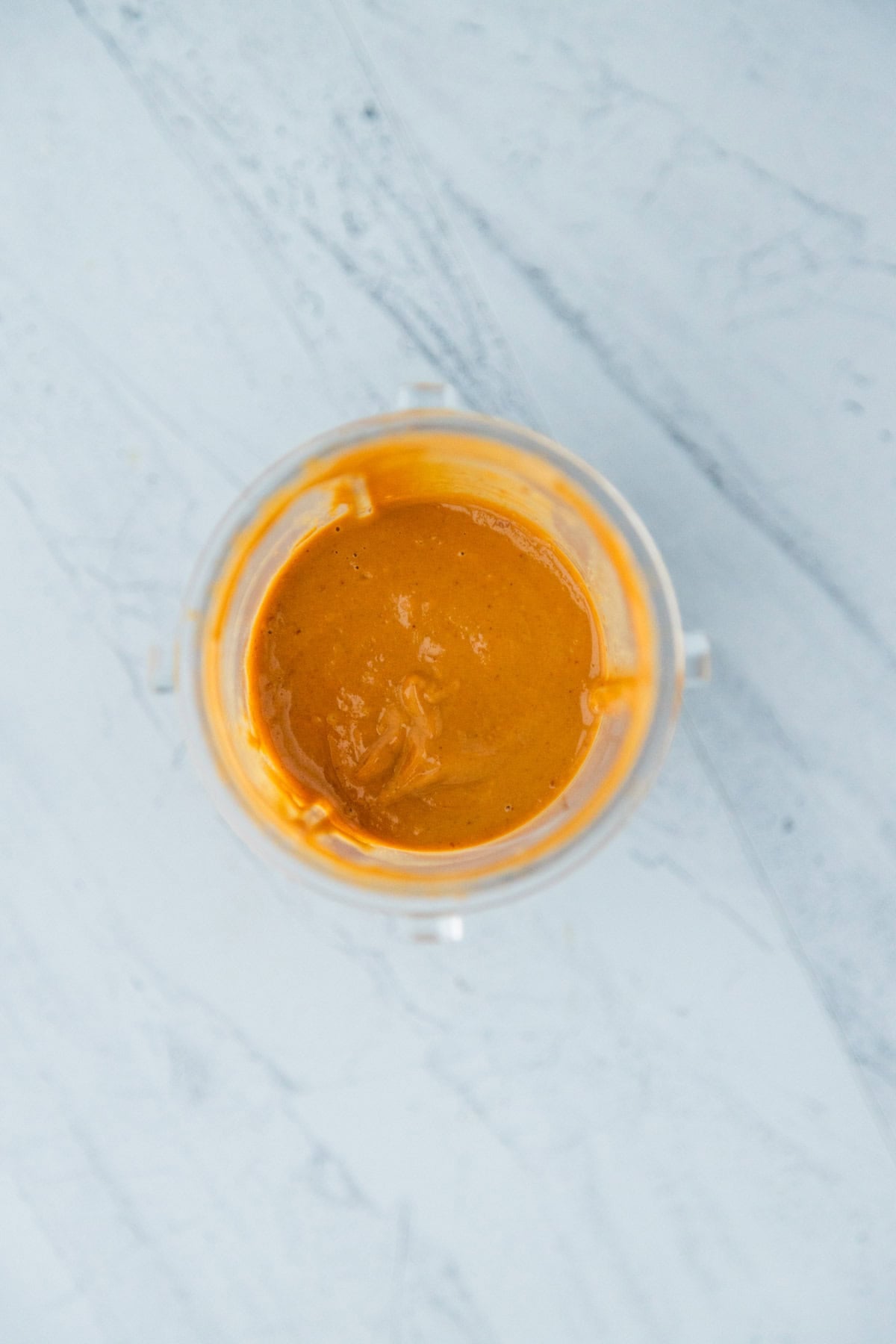
- Step 2: Blend until creamy and smooth.
How to Use This Asian Peanut Sauce Recipe
- Dipping sauce for spring rolls, dumplings, and satay skewers.
- Drizzle over rice bowls, Buddha bowls, or roasted veggies.
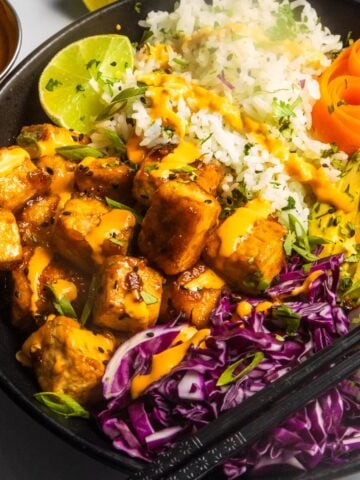
- Make a bowl with this crispy baked tofu recipe, lime rice with cilantro, and spicy Thai peanut sauce. So good!
- Wraps & sandwiches like vegan banh mi or lettuce wraps.
- This sauce is delicious with coconut rice, roasted sweet potatoes, air fryer sweet potato wedges, or fresh crunchy cucumbers!
Tip: If you're making a single batch, use a small bullet blender. The sauce pours out much easier! If you’re doubling or tripling the batch for meal prep (which I always do!), then use the bigger blender.
Storage and Meal Prep
- Refrigerator: Store leftovers in an airtight jar or container for up to 5 days. It will thicken as it chills. When you're ready to use it, just stir in a little warm water until it's smooth again.
- Freezing: Store in a freezer-safe container for up to 2 months. Let it thaw overnight in the fridge, then whisk in 1–2 tablespoons of warm water or lime juice to restore creaminess.
- Meal Prep: This peanut sauce recipe is excellent for meal prep. Use it for salad rolls, fresh veggies, bowls, wraps, noodles, or whatever you have on hand.
For another thick and creamy sauce that comes together fast, try this vegan chipotle sauce next.

Easy Asian Peanut Sauce FAQs
Thai peanut sauce is usually made with peanut butter, soy sauce, garlic, ginger, lime juice, and something sweet to balance it out. Some versions also include coconut milk, but this one keeps it simple without it.
Yes, you can. Natural peanut butter usually gives the best flavor and texture, but regular peanut butter still works.
Peanut sauce naturally thickens as it sits, especially after being chilled. Just stir in a little warm water, lime juice, or tamari until it loosens back up.
Yes, this sauce works really well with noodles. If you’re tossing it with rice noodles, soba, or stir-fried noodles, just thin it slightly with a little extra warm water so it coats everything more easily.
They are often used interchangeably, but Asian peanut sauce is a broad category with many styles. Thai peanut sauce is a specific version known for being creamy and zesty, usually served with noodles or satay.


Did you try this recipe? Let me know what you thought by leaving a comment below and sharing it on Instagram, Facebook, & Pinterest! 💛
📖 Recipe
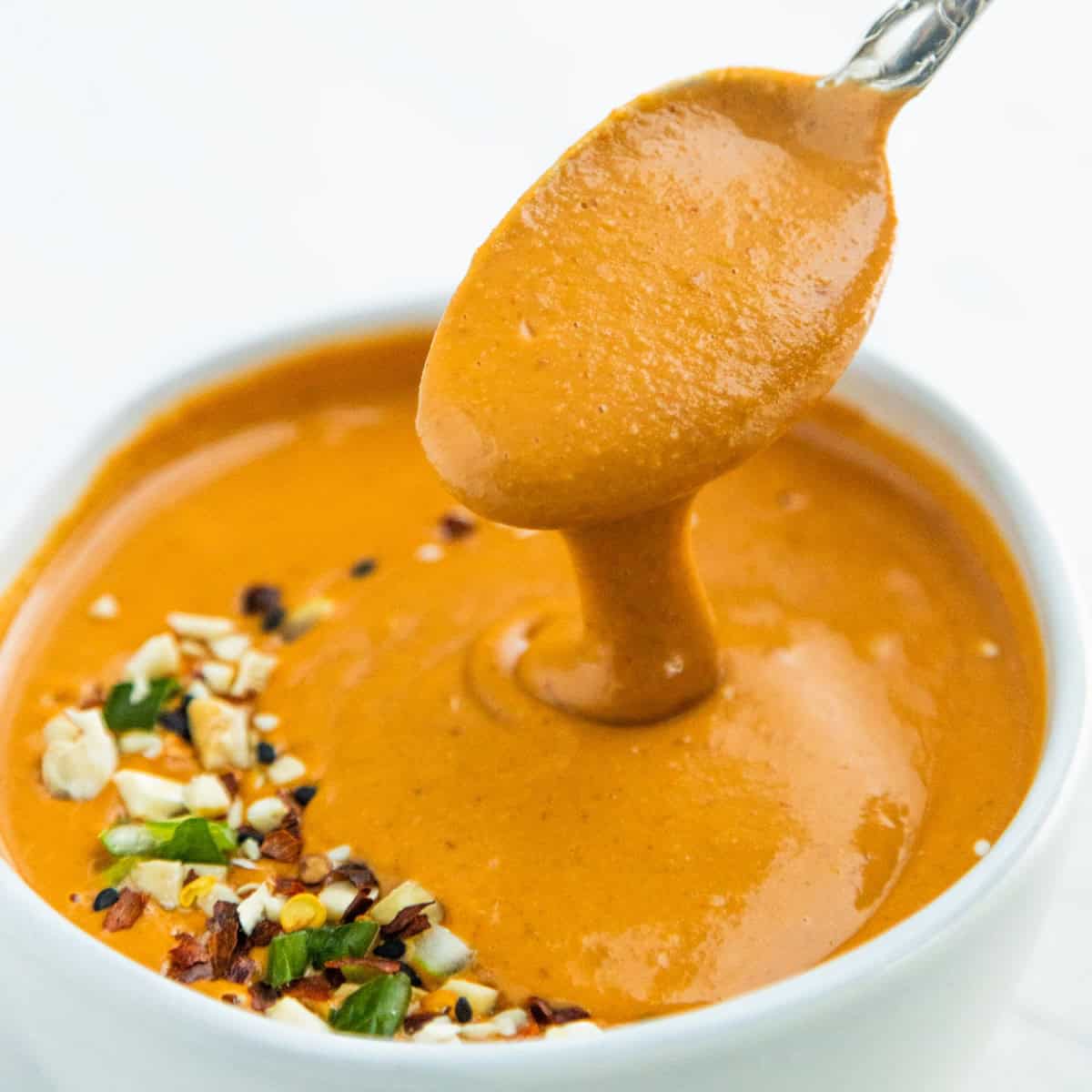
Asian Peanut Sauce
Want To Save This Recipe?
Ingredients
- ½ cup peanut butter, smooth or crunchy
- 3 tablespoons tamari, or soy sauce
- 2 tablespoons maple syrup
- 1 tablespoon toasted sesame oil, skip for oil-free
- 2 tablespoons lime juice
- 1 teaspoon rice vinegar
- 2 tablespoons chili garlic sauce, adjust to spice preference
- 2 cloves garlic, peeled
- 1 teaspoon ginger, skin removed (or ½ teaspoon powdered ginger for a milder option)
- ¼ cup warm water
Instructions
- Add all ingredients to a blender or food processor.
- Blend until smooth and creamy.
- Thin with warm water, 1 tablespoon at a time, for a drizzlable consistency.
- For extra crunch, top with sesame seeds or crushed peanuts when serving.
- Use immediately or store leftover sauce in an airtight container.
Notes
- Adjust to your liking. For more sweetness, add a drizzle of maple syrup. More brightness, a squeeze or two of lime. More spice, add extra chili sauce or sriracha (start with 1 tablespoon). For more savory, add a touch of tamari or white miso paste.
- I use unsweetened natural peanut butter, but any kind (crunchy or creamy) will work. If using sweetened, you may need to reduce the sweetener. You can also use almond butter.
- If you don't have a blender, a bowl and whisk work too. Just warm the water.
- Peanut sauce naturally thickens after chilling. Just stir in a little warm water or lime juice until it loosens back up.
- If using a large blender, you may lose a little sauce under the blades. A small blender cup works best for a single batch. If you're doubling or tripling the recipe (highly recommended for meal prep!), a full-sized blender works perfectly.
- If you want a thinner peanut sauce for noodles, bowls, or salad, add more warm water 1 tablespoon at a time until it’s how you like it.
Nutrition

Julie Gaeta is a plant-based recipe creator, certified Integrative Nutrition Health Coach, and mom of nine who's been plant-based for over 20 years. She's cooked approximately 4,382 pots of beans and can't vacation without her juicer and pasta pot. Her work has been featured in HuffPost, Yahoo, YourTango, and other major outlets. She helps others simplify wellness and feel good again through her blog, coaching, and weekly newsletter.

Julie Gaeta says
This sauce is creamy, bold, and has just the right amount of kick. I use it for dipping spring rolls, tossing with noodles, or drizzling over bowls. So simple and good!