

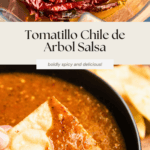
This chile de árbol salsa, also known as salsa de chile de árbol, is a classic Mexican taquería-style salsa made with tomatillos for a bright, tangy balance to the toasted chiles. It's pourable, dippable, and intensely spicy, with an adjustable heat level. Spoon it over tacos, pozole, tamales, beans, or anything that needs serious heat.

🔍 A Quick Look: Chile de Árbol Salsa
- 🕒 Total time: 30 minutes
- 👥 Yield: 3.5 cups
- 🎯 Key ingredients: dried chile de árbol, tomatillos, garlic
- 🌱 Diet: vegan, plant-based, dairy-free, oil-free option
- 🔥 Heat level: very spicy, but adjustable to your preference
- 💕 Why you’ll love it: Flavor-packed, pourable, bold, restaurant-style heat
SUMMARIZE & SAVE THIS CONTENT ON
Jump to:
- 🔍 A Quick Look: Chile de Árbol Salsa
- Why This Recipe Works
- Is Chile de Árbol Salsa Spicy?
- Ingredients & Substitutions
- Tested Tips
- How to Make Chile de Árbol Salsa With Tomatillos
- What to Serve With Chile de Árbol Salsa
- Storage & Meal Prep
- Chile de Árbol Salsa FAQs
- What to Drizzle, Dip, and Spoon It On
- 📖 Recipe
- 💬 Comments
I’ve been making this chile de árbol salsa for over 20 years. I’ve boiled, grilled, baked, roasted, and simmered it way longer than I needed to. I’ve pretty much tried it all (it's a favorite).
Sometimes I simmer the toasted chiles with the vegetables to soften them before blending; other times I add them directly to the blender. Both methods work. The salsa is delicious straight from the blender, or you can simmer it in a little oil for deeper color, richer flavor, and a thicker consistency.
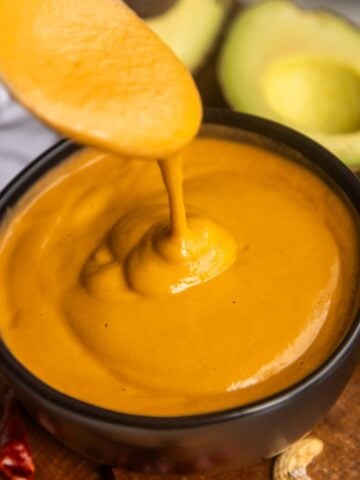
I’ve made it with as few as 7 chiles and as many as 60. The base stays balanced, and you decide the heat. Blend it thin and smooth for a classic taquería-style salsa, or leave it a little thicker and spoon it over my loaded black bean nachos.
For more Mexican salsa recipes, try my creamy tomatillo salsa recipe with chile de arbol, salsa de molcajete roja, or salsa tatemada roja.
Why This Recipe Works
- Toasting the dried chiles brings out their deep flavor.
- Charred tomatillos and tomatoes add brightness, sweetness, and balance.
- Low-speed blending lets you control whether the salsa is smooth or slightly textured.
- The optional oil finish deepens the color and creates a richer, more rounded flavor.
Spoon it over easy refried black beans and Mexican rice with lime. It's also delicious when paired with a green salsa like vegan creamy jalapeno sauce.
Is Chile de Árbol Salsa Spicy?
Yes. Chile de árbol peppers range from about 15,000–30,000 Scoville Heat Units (SHU). For comparison, jalapeños range from 4,000–8,500 SHU and serranos from 10,000–25,000 SHU. Compared with milder dried chiles like guajillo and ancho, chile de árbol has a sharper, cleaner heat, so a little goes a long way.
I definitely didn’t start out with the heat tolerance I have now. It’s something you build up to, which is why I give you a range for the chiles. Start with fewer and work your way up (if you want). I still love it on tacos dorados de papa and air-fryer bean taquitos.
Ingredients & Substitutions
Here’s what you’ll need to make this toasted chile de arbol salsa recipe:

- Dried chile de árbol (20–30) - Try to buy them with the stems removed, or remove the stems before toasting. For less heat, use 15–20 chiles. For an even milder salsa, you can do as few as 7. If needed, dried chile japonés is the closest substitute. Dried Thai red chiles can also work, but use less because they can be hotter and sharper.
- Tomatillos - Fresh tomatillos give the best flavor. In a pinch, use about 1 ½ cups drained canned tomatillos for one batch, or one drained 28-ounce can for a double batch. Don't char canned tomatillos; simmer them before blending.
- Roma tomatoes
- Onion - White or yellow work.
- Garlic cloves - Use fewer cloves for a milder garlic flavor or more if you like it bold.
See recipe card below for full ingredient list and amounts.
For a simple Mexican spread, serve this salsa with my homemade guacamole recipe and a classic salsa pico de gallo recipe. It’s also a great spicy option for a build-your-own taco bar.
Tested Tips
- Stir constantly when toasting chiles. Even 10 seconds unattended can overdo it. Keep them moving in the pan, and remove once they smell fragrant and look lightly blistered.
- Let each vegetable cook at its own pace: A little char is good, but the vegetables may soften at different times. Remove each one when it is softened and blackened in spots.
- Adjust the heat: Use about 7 chiles for a milder (but still spicy) salsa, 20-30 gives it serious heat. Use more if you like it extra hot, or start with fewer if you’re unsure.
- A cast-iron or heavy-bottomed skillet gives you better, more even blistering.
This Mexican salsa is perfect for cookouts, especially with grilled foil potatoes, vegan taco dip, and black bean and corn pasta salad. Drizzle it on, mix a little in, or set it out and let everyone add as much heat as they want.
How to Make Chile de Árbol Salsa With Tomatillos
This chile de árbol salsa comes together in one skillet and a blender, with a quick simmer to soften the chiles before blending.

- Step 1: Toast the chiles: Toast in a dry skillet for 1–2 minutes, stirring constantly, until fragrant and lightly blistered. Remove from the pan.

- Step 2: Char the vegetables: Cook the tomatillos, tomatoes, and onion for 8–10 minutes, turning occasionally, until softened and blackened in spots.

- Step 3: Add the water, garlic, and toasted chiles. Bring to a boil, then simmer for 5–8 minutes.

- Step 4: Transfer everything to a blender, add the salt, and blend on low to your preferred texture.

- Step 5: Serve it straight from the blender, or finish it in the skillet with the oil for about 10 minutes for deeper color and richer flavor. Stir in the optional onion and cilantro after cooking.
What to Serve With Chile de Árbol Salsa
Spoon this toasted chile de árbol tomatillo salsa over Instant Pot refried beans, bean and rice tacos, vegan smothered burritos, tostadas, nacho bowls, grilled vegetables, or homemade tortilla chips.
For get-togethers or holidays, like Cinco de Mayo, set out a bowl of arbol chile salsa with Texas caviar bean salad, cold pinto bean salad with corn, creamy avocado salsa dip, and plenty of tortilla chips.
I also like to serve this spicy salsa drizzled over Mexican rice for tacos with a pitcher of iced horchata or homemade aguas frescas.
Storage & Meal Prep
- Fridge: Store salsa in an airtight container or glass jar for 4-5 days.
- Freezer: Let the salsa cool completely, then freeze for up to 3 months.
- Meal Prep: Make a double batch and keep it in an airtight container in the fridge for the week, or freeze the extra and use it on Mexican burrito bowls with creamy burrito bowl sauce.
I'd also recommend adding a spoon or two of salsa to your soup when finished cooking. It gives plant-based soups such a good flavor without being overly spicy (but you can always add more if you like).
Chile de Árbol Salsa FAQs
Use fewer chiles, shake out some of the seeds, or add an extra tomato or tomatillo before blending. Letting the salsa rest for 10–30 minutes can also help the heat mellow slightly.
The chiles were likely over-toasted, or the garlic may have burned. Dried chiles should look lightly blistered and smell fragrant, not blackened. Toast gently, stir constantly, and remove anything from the pan before it burns.
Yes. You can leave out the Roma tomatoes and use only tomatillos. The salsa will taste brighter, tangier, and a little more heat-forward without the tomato to soften the sharp edges.
The color can vary from batch to batch. Fewer chiles allow more of the green tomatillo color to show through, which can make the salsa look brownish green. More chiles create a deeper red, and the optional oil finish can deepen the color even more. Both work!
What to Drizzle, Dip, and Spoon It On
This salsa chile de arbol is delicious drizzled over just about anything. If you’re putting together a game-day spread, I’ve gathered plenty more ideas in my vegan tailgating recipes collection.


Did you try this recipe? Let me know what you thought by leaving a comment below and sharing it on Instagram, Facebook, & Pinterest! 💛
📖 Recipe

Chile de Árbol Salsa
Want To Save This Recipe?
Ingredients
- 20-30 dried chile de árbol, stems removed
- 12 ounces tomatillos, (about 8-10) husked and rinsed
- 2 Roma tomatoes
- 1 medium white or yellow onion, quartered
- 6-8 cloves garlic
- 2 cups water
- 1 tablespoon sea salt, or to taste
- 2 teaspoons neutral oil , optional
- finely diced white onion , optional, to taste
- chopped fresh cilantro , optional, to taste
Instructions
- Heat a large cast-iron or heavy skillet over medium heat. Add the dried chile de árbol and stir constantly until fragrant and lightly blistered, about 1–2 minutes. Remove them from the pan.
- Add the tomatillos, tomatoes, and onion to the same skillet. Cook for 8–10 minutes, turning occasionally, until softened and blackened in spots.
- Carefully add the water, garlic, and toasted chiles. Bring to a boil, then reduce the heat and simmer for 5–8 minutes, until softened.
- Transfer everything to a blender and add the salt. Blend on low speed to your preferred texture, stopping sooner for a little texture or blending longer for a smooth salsa.
- The salsa is ready to serve. For deeper color and a richer, more rounded flavor, continue to the optional oil finish. Otherwise, skip to the final step.
- Heat the oil in the skillet over medium heat. Carefully pour in the blended salsa (it will splatter). Reduce to a low simmer and cook uncovered for about 10 minutes, stirring occasionally. Simmer for up to 20 minutes for a thicker salsa. Add a splash of water to thin it if needed, then taste and adjust the salt. Remove from the heat.
- Stir in the optional diced onion and cilantro, or add them to individual servings.
Video
Notes
- Adjust the heat: Use 7–20 chiles for less heat or 30 or more for a hotter salsa. Start with fewer if you’re unsure; chile de árbol gets intense fast.
- Skillet tip: I char everything in a dry skillet. The vegetables may cook at different rates, so remove each one when softened and blackened in spots. A little sticking is normal.
- Chile option: Add the toasted chiles straight to the blender, or simmer them with the vegetables first. Simmering softens them so they blend more smoothly.
- Blending tip: Blend on low and stop when you like the texture. Blending too long or too fast can make the salsa look lighter and foamy, although it will settle as it sits.
- Oil-free option: Skip the oil finish and serve the salsa straight from the blender- it’s delicious either way. The oil deepens the color and gives it a richer, more rounded flavor; simmering longer also makes it thicker.
- Fresh onion and cilantro: Add them shortly before serving for the freshest flavor and texture. They can be stirred into the whole batch, but they will soften as the salsa sits. If freezing, leave them out and add them after thawing.
- Handle with care: Chile de árbol can irritate your skin and eyes. Wear gloves if you’re sensitive, and wash your hands well afterward.
Nutrition

Julie Gaeta is a plant-based recipe creator, certified Integrative Nutrition Health Coach, and mom of nine who's been plant-based for over 20 years. She's cooked approximately 4,382 pots of beans and can't vacation without her juicer and pasta pot. Her work has been featured in HuffPost, Yahoo, YourTango, and other major outlets. She helps others simplify wellness and feel good again through her blog, coaching, and weekly newsletter.


Gary Jones says
Your recipe calls for toasting the peppers first, but the Facebook reel shows you adding the garlic and peppers with the water and boiling after you blister the veggies. Which is the better way?
Julie Gaeta says
Great question! Both methods work, and I use both. I toast the chiles first for flavor. You can transfer them straight to the blender after toasting, as written in the recipe, or add them back to the pan with the water and vegetables for the last few minutes, like I did in the video. Simmering them softens the dried chiles and helps them blend really smoothly. Either way works well!
Julie Gaeta says
This one’s bold and fiery in the best way. I keep a jar of this salsa in the fridge to spoon over tacos, rice, beans—you name it. It’s simple but packs serious heat and flavor—a favorite when I want something with a lot of kick (a little goes a long way!).